6th September 2026 · Chat GPT · 36 views
There are few things that sound quite as civilised as afternoon tea. A pot of tea, a few sandwiches, some little cakes and, most importantly, a scone covered in jam and cream. But afternoon tea wasn’t actually invented as an excuse to eat cake in the middle of the afternoon. Although that’s certainly one of its better features.
It started with a gap
The tradition is generally credited to Anna, the Duchess of Bedford, in the 1840s.
At the time, the main meals of the day were breakfast and a late dinner. As you might imagine, this left a rather awkward period in the afternoon when hunger could start to make itself known.
The Duchess apparently began asking for tea, bread, butter and cake to be brought to her in the afternoon.
It proved popular.
She started inviting friends to join her, and before long, afternoon tea had become fashionable among the upper classes.
And from there, the idea gradually spread.
Tea, sandwiches and tiny cakes
Early afternoon tea was a fairly simple affair.
Tea was obviously the star of the show, accompanied by small sandwiches, bread and butter, cakes and biscuits.
Over time, things became rather more elaborate.
Three-tiered cake stands appeared, with sandwiches on the bottom, scones in the middle and cakes and pastries on top.
There was also a certain amount of etiquette involved.
The sandwiches were small enough to eat neatly, the cakes were delicate and the tea was, naturally, poured from a proper teapot.
Nobody was expected to arrive carrying a packet of biscuits from the cupboard.
Afternoon tea or high tea?
This is where things get slightly confusing.
In Britain, afternoon tea and high tea are not actually the same thing.
Afternoon tea is the lighter meal, traditionally served in the afternoon.
High tea was more substantial and was traditionally associated with the evening meal of working families. It could include meat, vegetables, bread and other hearty food.
The word “high” refers to the type of table it was served at, rather than suggesting that it was somehow a more important version of afternoon tea.
So calling an afternoon tea “high tea” isn’t quite right.
Not that anyone is likely to arrest you for it.
The great scone argument
And then we come to the important bit.
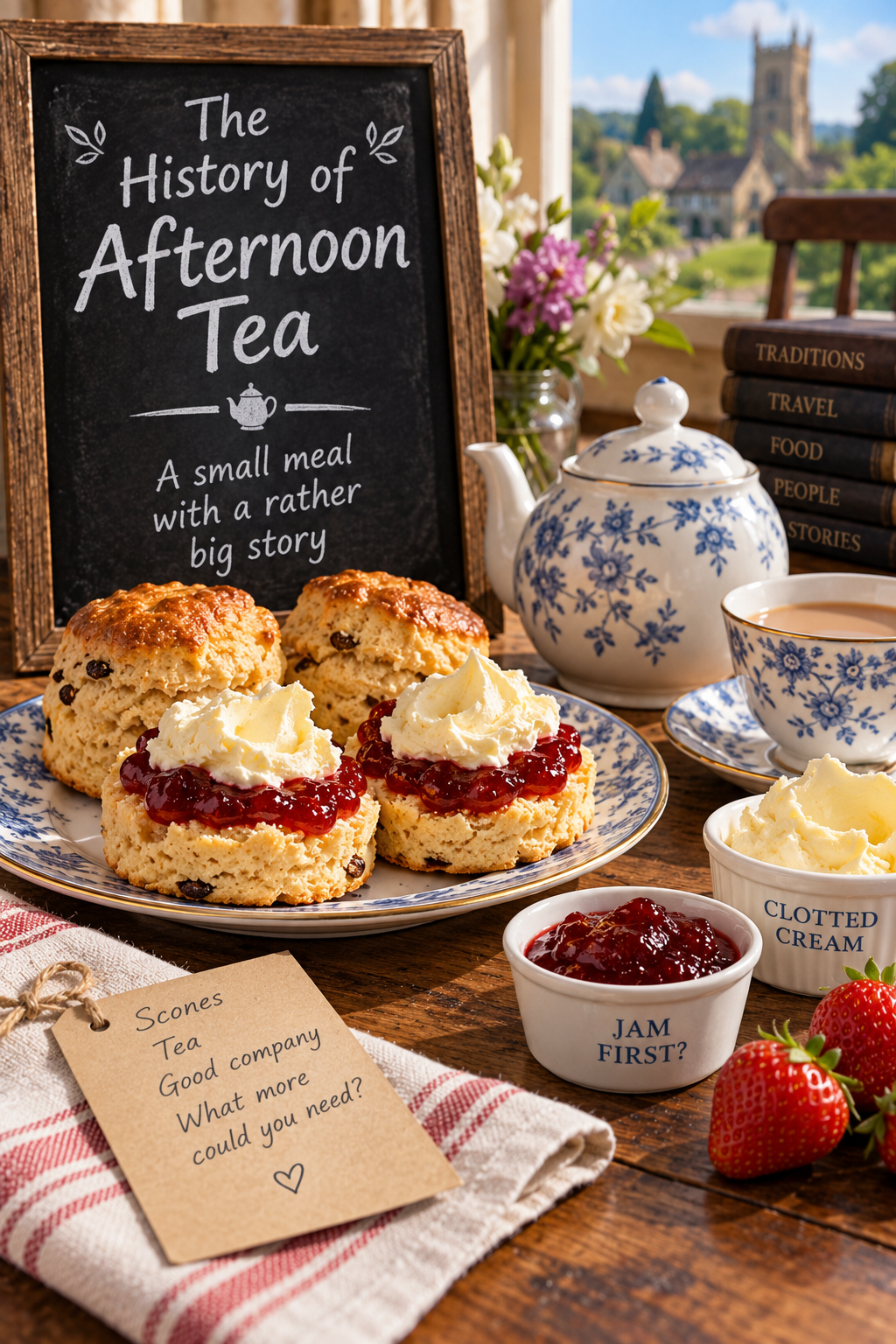
Jam first or cream first?
In Cornwall, the traditional method is generally jam first, followed by cream.
In Devon, cream first is the usual approach.
Both sides are remarkably confident that they are correct.
The debate has continued for years and shows no sign of being resolved.
Perhaps that’s exactly how it should be.
After all, afternoon tea is supposed to be about relaxing, having a chat and enjoying something nice to eat.
There are worse ways to spend an afternoon.
And if there’s a scone involved, there’s really no reason to complain.